




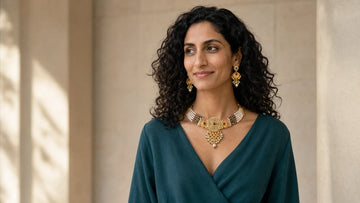
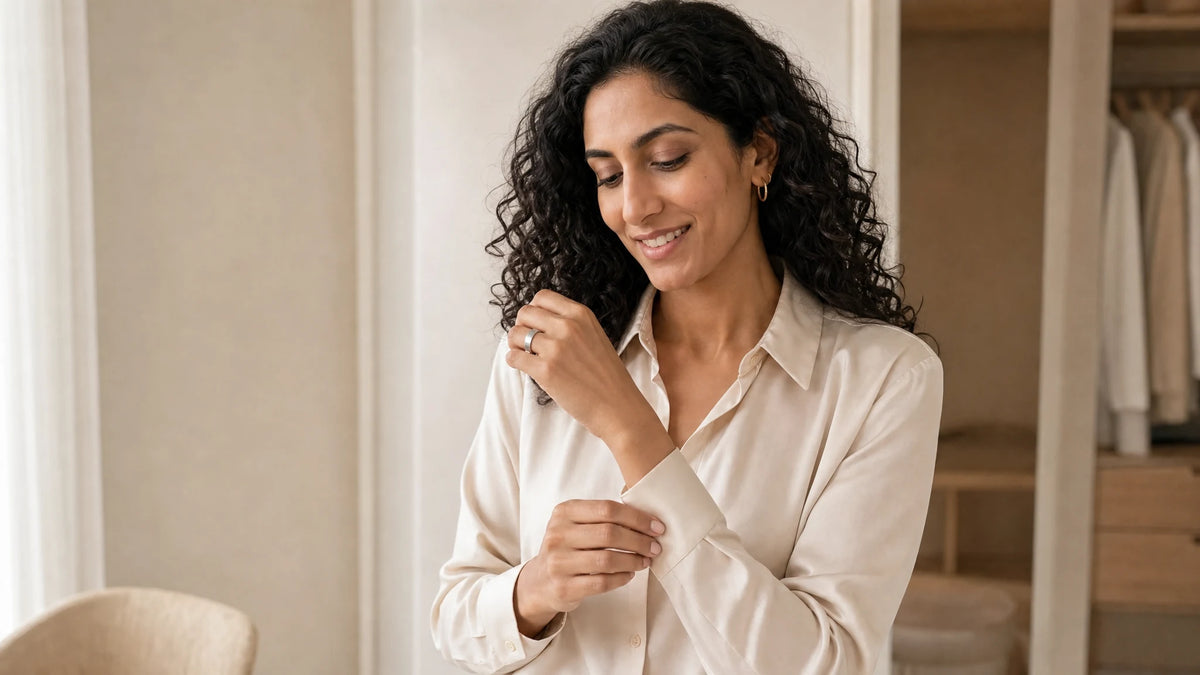
As worn in the photo above:

The main distinction between an engagement ring and a wedding band lies in their timing and physical design. An engagement ring is presented during a marriage proposal and traditionally features a prominent focal point such as a gemstone or raised setting. In contrast, a wedding band is exchanged during the ceremony, marking marriage with a lower, smoother profile made for everyday wear. Deciding on the right balance of an engagement ring vs wedding band comes down to your personal taste, comfort preferences, and daily routine.
Main differences between engagement rings and wedding bands
Timing and purpose set these two rings apart from the start. An engagement ring marks the initial agreement to marry. Because it is designed to celebrate a proposal, it often commands attention with a raised stone, halo detail, or sculpted metal setting. People typically wear it throughout the engagement period, either on its own or alongside other favourite pieces.
A wedding band enters the picture on the wedding day itself. Both partners exchange bands during the ceremony to represent their marriage vows. Because people wear their wedding ring continuously through work and daily chores, the shape is usually streamlined. Most designs sit flat against the skin to avoid catching on knitwear or everyday surfaces. When comparing an engagement ring vs wedding band, you will notice that the band prioritises simple geometry and daily resilience, while the engagement piece leans into decorative detail.
Understanding wedding ring bands and terminology
Jewellery terminology can cause confusion when you start browsing through bridal collections. Couples frequently ask a straightforward question: Is a wedding band the same as a wedding ring? The short answer is yes. In contemporary jewellery, both terms describe the exact same item. Jewelers and couples use the phrases interchangeably to refer to the circular band exchanged during the ceremony.
Historically, some subtle distinctions existed between the words. A traditional wedding ring band was almost always a plain, unadorned loop of yellow gold, white gold, or platinum with a uniform width all the way around. The word ring, on the other hand, could refer to any circular ornament, including styles set with small diamonds, geometric engraving, or coloured stones. Today, that line has blurred completely. Whether you select a minimalist gold wire band, a contoured diamond band, or a patterned ethnic piece from The Colourful Aura, your wedding ring band serves the same ceremonial function.
How to wear and stack your rings
Wearing both rings together is a widespread custom, but there are no strict rules that you must follow. Traditional etiquette in the UK dictates that your wedding band goes on the left ring finger first, followed by your engagement ring on the outside. This custom stems from an ancient Roman belief that a vein in the fourth finger connected straight to the heart. Placing the wedding band closest to the hand kept the marriage symbol nearest to that vein.
Modern styling offers complete freedom to depart from this convention. Some people prefer to wear their engagement ring on the right hand to prevent rubbing between two different metal settings. Others stack multiple pieces on one finger by adding textured stacking rings or milestone anniversary bands. If you love the layered look, finding the right proportion between your engagement ring vs wedding band creates a balanced appearance without overwhelming your hand.
Practical tips for choosing metals and profiles
Practical considerations should guide your selection just as much as visual style. If you plan to wear your rings on the same finger, consider how the profiles sit beside one another. High-set solitaire engagement rings leave room underneath for a straight band to sit flush against the metal. Low-set stones or wide vintage settings may require a curved or contoured band so both pieces rest together without an awkward gap.
Metal choice also affects long-term wear. Metals of different hardnesses can wear down softer materials over years of friction. Pairing a platinum band with a gold ring, for example, can cause the platinum to slowly abrade the gold. Matching your metals or choosing durable everyday materials keeps both pieces in good condition. At The Colourful Aura, handcrafted designs in sterling silver and gold finishes celebrate cultural motifs while offering comfortable, lightweight options for everyday styling. Every order comes with Free UK delivery, which makes it straightforward to explore different band widths and stacking styles from home.
Thinking through the engagement ring vs wedding band dynamic helps you select pieces that complement your wardrobe and everyday routines. Whether you prefer an ornate bridal pairing or a quiet, minimal loop, the best combination is one that feels comfortable on your finger every single day.
Choosing between traditional sets and modern alternatives comes down to what fits your personal style and daily life. Both pieces carry their own distinct history, and the way you wear them should reflect your own preferences rather than rigid conventions. Taking the time to consider comfort and proportions ensures your rings remain a joy to wear for decades to come.


